
Czech Science Doesn't Lack Talent. It Lacks a System to Keep It.
09/25/2026 Author: Petra Roštínská
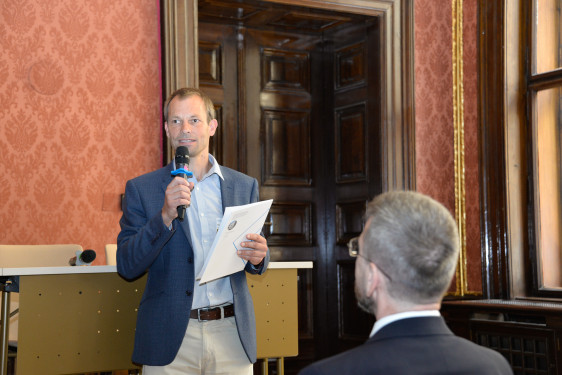
Unrecognised talent at primary school, a PhD student dependent on a single supervisor, a woman who loses her postdoctoral position due to maternity leave – the SCI–PO 2026 conference demonstrated that these are interconnected losses, not isolated problems. According to its conclusions, the Czech Republic does not lack talented people, but rather a system capable of recognising and retaining them in good time.
The SCI–PO 2026 conference, ‘People for the Future of Research and Innovation’, was organised on 23 June in Prague by the Prague Technology Centre, CERGE-EI, the National Education Fund, the Institute of Sociology of the Czech Academy of Sciences and the Centre for Joint Activities of the Czech Academy of Sciences. Speakers discussed career paths ranging from the identification of talent in primary schools to team leadership, and sought to identify the points at which the system most frequently loses talented individuals.
A chain of losses from primary school to team leadership
According to the conference, the Czech system does not suffer from a lack of talent, but fails to identify, develop and retain it in good time. Children with the same abilities have very different chances of accessing stimulating teaching, competitions or work placements – depending on which school they attend, where they live and what information their family has. Gender stereotypes also contribute to talent being overlooked.
At secondary school, an interest in science can be transformed into a real-life experience through an internship, a personal project or a high-quality mentor – but these opportunities are mainly available to pupils who are already motivated, have the school’s support and are able to commute. Without links to the next steps – university, research organisations – such programmes remain isolated pockets of opportunity rather than a pathway to a wider audience.
The critical point is the PhD programme: whilst students on these programmes have formal student status, in practice they often carry out work that is essential to the team, without the corresponding security or support. Postdoctoral positions tend to consist of a series of short-term contracts and moves with no clear long-term prospects – and it is precisely in these roles, because they are time-limited, that women most often lose their place in research after having children. Even leading a small team is not a given: new team leaders often take on responsibility for recruitment, motivation and conflict resolution without preparation and without clearly defined powers.
The problem is not just about money
According to the conference, the same conditions recur across the various stages of a career, and these determine whether people remain in research: a safe and trustworthy working environment with clear procedures for reporting inappropriate behaviour; predictable career paths with open recruitment and clear role descriptions; and a clear separation of the roles of supervisor, mentor and team leader – roles which today often merge into a single person, increasing a junior researcher’s dependence on a single individual.
What institutions and grant-awarding bodies actually reward also plays a role. Today, evaluation is based primarily on publications, grants and administrative reporting, whilst mentoring, open science, leadership and knowledge transfer tend to remain secondary activities – even though it is precisely these that, in the long term, determine whether an institution can retain its team and maintain the impact of its work.
Institutions, not individual programmes
The conference identified seven directions that subsequent public policy should follow: managing research careers as an interconnected whole; extending the identification of talent beyond the confines of competitions and selective universities; setting quality standards for doctoral studies and early-career researchers; strengthening institutions’ responsibility for working conditions and safety; professionalise people management and HR support, open up careers to mobility and transitions between sectors, and adapt assessment and skills to working with data and artificial intelligence.
The conference allocated responsibility for these changes amongst several stakeholders. According to the conclusions, the state should create a common framework for research careers, set minimum standards and remove administrative barriers for foreign workers or for reconciling doctoral studies with parenthood. Grant providers should genuinely assess and fund the conditions for leadership and staff development within institutions, rather than merely treating them as a formal part of the application. Schools, universities and research organisations bear responsibility for transparent career paths and a safe environment; companies and the public sector can offer internships and temporary positions; and managers have direct responsibility for recruitment, feedback and the culture of their teams.
In his closing summary of the conference, Michal Pazour from the Technology Centre Prague confirmed this: “We are at an ideal stage where we can identify and develop a broad talent base, but this phase will come to an end, due to demographic trends, in ten to fifteen years at the latest. Now is the time to be bold – so that those who formulate strategies at national level and within institutions take responsibility and create the conditions that will enable us to recognise talent wherever it actually is, not just where there is a suitable family environment, and then develop it at all levels.”
According to SCI–PO 2026, the issue is not about finding a new programme for Czech research, but about deciding who will bear responsibility for creating and developing a high-quality system in which people do not lose their motivation or the experience they have gained so far as they move between the various stages of their careers.