
New booklet explores how mutual learning can strengthen foresight in European R&I policymaking
07/20/2026
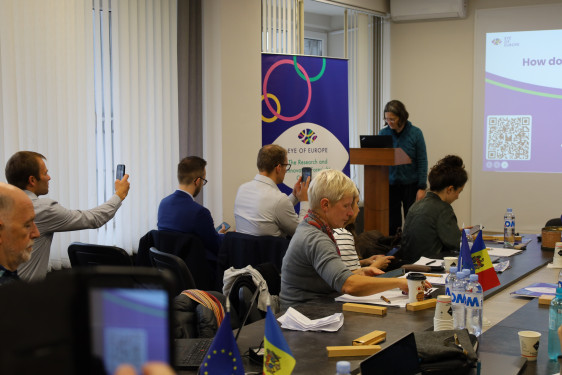
Technology Centre Prague has published a new Booklet on Mutual Learnings under the European Eye of Europe project. Drawing on five Mutual Learning Events, the publication examines how peer exchange, community building and institutional learning can support the more systematic use of foresight in research and innovation policy.
European research and innovation systems are facing interconnected technological, geopolitical, demographic and environmental transformations. In this context, public authorities cannot rely solely on retrospective evidence and incremental policy adjustment. They increasingly need the capacity to identify emerging developments, explore alternative futures and incorporate long-term perspectives into present-day decisions.
The five Mutual Learning Events organised between 2024 and 2025 responded to this challenge by bringing together representatives of ministries, public agencies, European institutions, research organisations and foresight communities from Member States and Associated Countries. The events addressed emerging foresight practices, communication of foresight results, integration into the policy cycle, long-term visioning and priority-setting, and the development of foresight culture.
The new booklet does more than summarise the individual events. It offers a cross-cutting analysis of recurring lessons, transferable models and the conditions that enable foresight to influence policy practice.
Foresight as a governance capability
A central conclusion is that foresight should not be understood only as a technical exercise producing scenarios, forecasts or reports. Its wider value lies in creating structured spaces for collective reflection, testing assumptions and discussing strategic choices under uncertainty.
Foresight can add value across the policy cycle: from agenda-setting and strategic planning to priority definition, policy design, monitoring and policy adaptation. Its influence, however, depends on whether foresight activities are connected to real policy processes, aligned with decision-making windows and communicated in formats that respond to the needs of policymakers.
The booklet also stresses that participation is not merely an aspiration linked to inclusiveness. It is a functional requirement for addressing systemic challenges. Involving policymakers, experts and stakeholders throughout the process improves the relevance of foresight insights, creates ownership and helps align actors around longer-term strategic directions.
Evidence of impact
The publication includes findings from a survey of MLE participants. The results indicate that the events improved understanding of foresight, increased confidence in applying it and strengthened awareness of approaches used in different European countries.
The reported effects can be observed at three levels. At the individual level, participants developed skills, knowledge and professional confidence. At the organisational level, the MLEs stimulated internal discussion, strengthened the legitimacy of foresight and, in some cases, contributed to the preparation of new foresight activities. At the systemic level, they supported cross-country exchange, professional networking and the emergence of common reference points.
A particularly important feature of the MLE format was its role as a safe and reflective learning space. Participants were able to discuss barriers, failures and unfinished ideas with limited reputational risk. This type of interaction is often difficult to create within formal administrative settings, yet it is essential for experimentation and institutional learning.
Moving beyond project-based activity
The booklet argues that mutual learning on foresight should not end with individual projects. It proposes developing a more permanent European learning capability linked to the European Research Area, supported by recurring peer-learning events, practical guidance, professional networks and digital collaboration.
The Futures4Europe platform is identified as an important complementary infrastructure. While face-to-face events create trust and intensive exchange, a digital platform can help maintain relationships, provide access to methods and examples, and sustain community activity between meetings.
The longer-term objective is not simply to produce more foresight reports, but to develop public institutions capable of working systematically with uncertainty and long-term change. This requires stable mandates, internal competence, leadership support and clear links between foresight and actual policy decisions.
The booklet is intended as a practical resource for ministries, research and innovation agencies, strategic bodies and foresight practitioners seeking to strengthen anticipatory capacity and make R&I policy more adaptive and future-oriented.
Authors: Michal Pazour, Lenka Hebáková and Iva Vančurová, Technology Centre Prague.
The publication was produced within the Eye of Europe project, funded under Horizon Europe.